Personal: Bathroom Care Items
The modern residential bathroom combines elevated ambient humidity, warm ambient temperatures, and intermittent aerosolization of toilet plumes into an aggressive incubation zone.
Toothbrush Bristle Splay and Aerosol Contamination
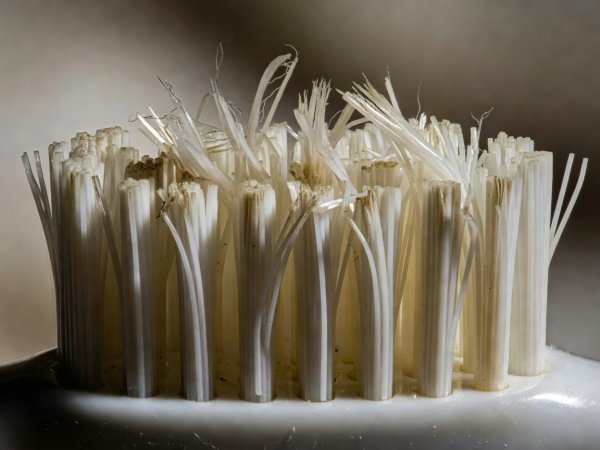
A manual or electric toothbrush head undergoes mechanical abrasion against dental enamel twice daily. Over 10 to 12 weeks, the microscopic rounded tips of nylon bristles curl outwards into sharp, jagged edges. This bristle curvature prevents tips from accessing the gingival sulcus, resulting in incomplete plaque biofilm removal and micro-lacerations to gum tissue.
Simultaneously, toothbrushes stored exposed near toilets are subjected to bio-aerosol deposition during flushing. Microbiological samplings consistently isolate Enterococcus faecalis, Streptococcus mutans, and Candida albicans from bristles stored over 90 days. Rinsing under tap water removes loose paste but leaves bacterial biofilm intact.
The Shower Loofah: A Microscopic Incubator
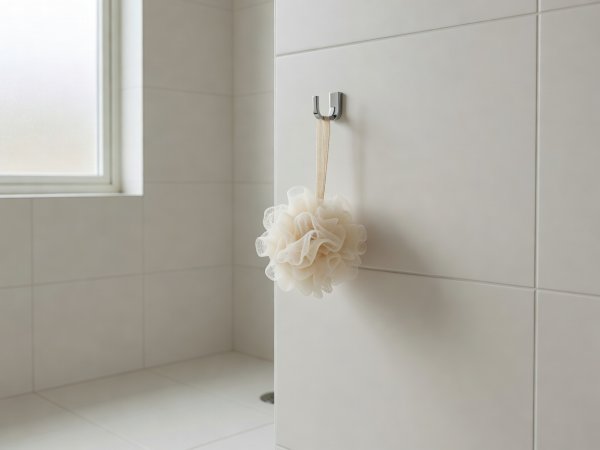
Natural loofahs (derived from dried fibrous gourds) and synthetic mesh bath poufs represent significant dermatological vectors. While exfoliating, loofahs scrub millions of dead keratinocytes from the skin surface. These sloughed cells become trapped within the tangled interior mesh.
Because bathrooms frequently maintain relative humidity above 75%, loofahs rarely achieve full core desiccation between showers. Under these conditions, opportunistic pathogens such as Pseudomonas aeruginosa and Staphylococcus aureus proliferate rapidly. Applying an aged loofah to freshly shaved skin often leads to bacterial folliculitis and impetigo. Natural loofahs must be discarded every 3 to 4 weeks; plastic poufs every 8 weeks.
Razor Blade Oxidation and Bath Towel Moisture
The cutting edge of a safety or cartridge razor blade measures less than 50 nanometers in thickness. While stainless steel is resistant to gross rust, mineral deposition and electrochemical pitting corrosion blunt the microscopic edge after just 5 to 7 shaves. Shaving with a dull blade pulls hair follicles and causes epidermal micro-abrasions, inviting bacterial entry.
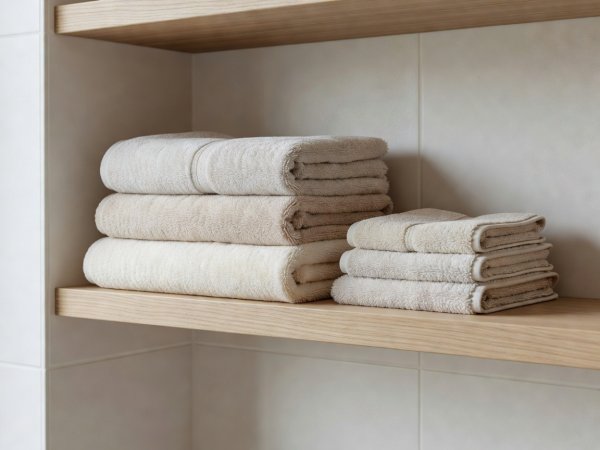
Similarly, heavy terrycloth bath towels retain moisture deep within cotton loops. After three uses, moisture and body sebum foster colonies of Staphylococcus epidermidis and musty fungal mildew. Towels must be air-dried fully after each use and laundered at minimum weekly at 60°C, with total replacement every 2 to 3 years when fiber absorption drops.
Personal Care Renewal Timetable
Toothbrush / Electric Head
Replace earlier if recovering from bacterial pharyngitis or if nylon filaments begin splaying past the outer perimeter line.
Natural Loofahs & Scrubbers
High moisture retention breeds bacteria. Synthetic poufs can last 6 to 8 weeks if allowed to dry completely in ventilated air.
Cartridge & Safety Razor Blades
Discard as soon as resistance or skin drag occurs. Storing razors upright in dry air extends microscopic edge sharpness.