Safety: Detectors & Extinguishers
Unlike kitchen consumables that emit foul odors, safety electronics degrade silently. A functional battery test button does not verify sensor responsiveness.
The Test Button Deception on Smoke Alarms
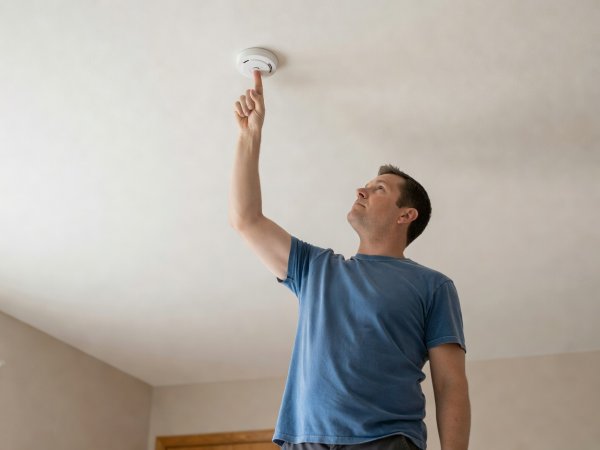
A widespread misconception among homeowners is that pressing the "Push to Test" button confirms that a smoke detector is operating properly. In virtually all residential units, the test button merely bridges the electrical circuit to ensure the 85-decibel horn and internal battery have continuity.
The test button does not evaluate the sensitivity of the internal sensor chamber. Over a decade of operation, photoelectric light sources drift out of baseline alignment, and ionization sensors suffer from isotopic decay and particulate fouling. Independent studies demonstrate that smoke alarms operating past their 10th anniversary experience an operational failure rate exceeding 30% during real fire outbreaks.
Carbon Monoxide Electrochemical Exhaustion
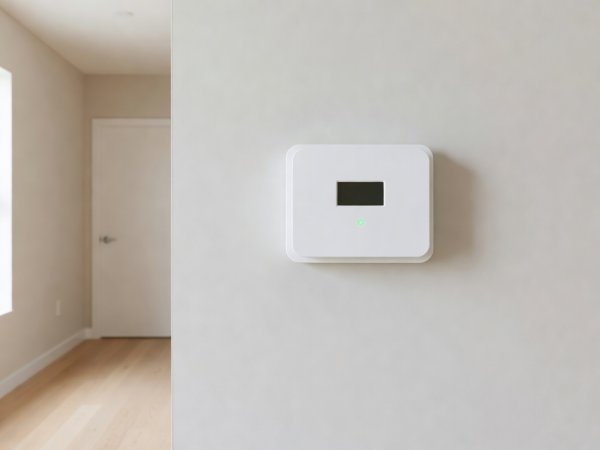
Carbon monoxide (CO) alarms utilize an electrochemical cell containing an aqueous electrolyte solution and platinum catalytic electrodes. When CO molecules penetrate the housing, a chemical reaction produces an electrical current directly proportional to the gas concentration in parts per million (ppm).
Unlike smoke alarms that endure for ten years, earlier-generation electrochemical sensors deplete their reactive electrolyte within 5 to 7 years. Modern combined detectors with 10-year sealed lithium batteries feature internal microcontrollers that initiate an "end-of-life" chirp cadence (distinct from low battery alerts) precisely when sensor drift exceeds UL 2034 tolerances.
Fire Extinguishers: Pressure Decay & Powder Caking
Domestic dry chemical extinguishers (typically Class ABC containing monoammonium phosphate pressurized by nitrogen gas) are rated for 10 to 12 years of standby readiness. However, environmental vibrations, thermal cycling, and elastomer valve shrinkage lead to two distinct failure modes.
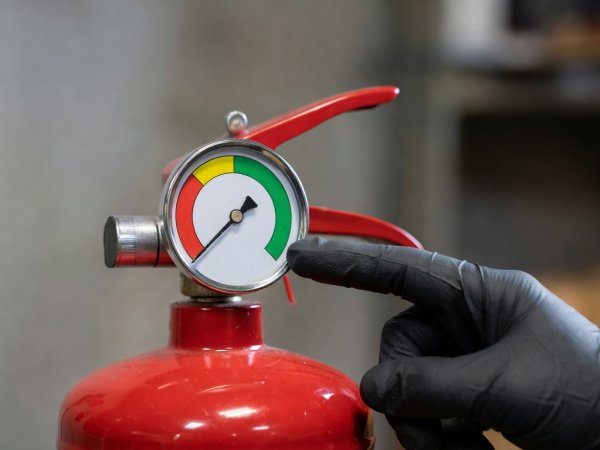
First, gradual nitrogen gas leakage through the stem valve drops operating pressure below the minimum threshold required to eject extinguishant powder through the discharge nozzle. Second, humidity ingress can cause the finely pulverized phosphate powder inside the cylinder to cake into solid clumps at the base. Turning the canister upside down and tapping the base lightly during annual inspections helps verify powder mobility.
Critical Life-Safety Replacement Cadence
Smoke Detectors (All Types)
Remove detector from baseplate and read manufacturing date. Replace complete unit regardless of whether battery is operational.
Standalone CO Detectors
Electrochemical electrolyte dries out. If unit lacks a 10-year sensor guarantee, discard after 60-84 months of ambient operation.
Residential Fire Extinguishers
Inspect gauge monthly. If needle drops below green zone or 12 years elapse from stamping, replace or seek certified recharging.