Bedding: Pillows & Mattresses
The human body spends roughly one-third of its operational life resting against textiles, foam layers, and spring systems that steadily accumulate biological debris.
The Pillow Weight Gain Phenomenon
A classic research premise in sleep epidemiology claims that a notable proportion of an aging pillow's dry weight is composed of epidermal cells, fungal spores, and microscopic mite carcasses. While hyperbole abounds online, clinical reality remains startling: an unencased fiberfill or feather pillow doubles its microbial allergen burden between 18 and 24 months of continuous nightly usage.
Common allergens include Der p 1 and Der f 1 fecal proteases produced by dust mites. These enzymes dissolve the protective mucosal barrier of the human respiratory tract, triggering chronic morning rhinitis, nocturnal coughing, and facial acne mechanica. Even rigorous surface laundering fails to extract allergen deposits embedded deep within open-cell memory foam cores.
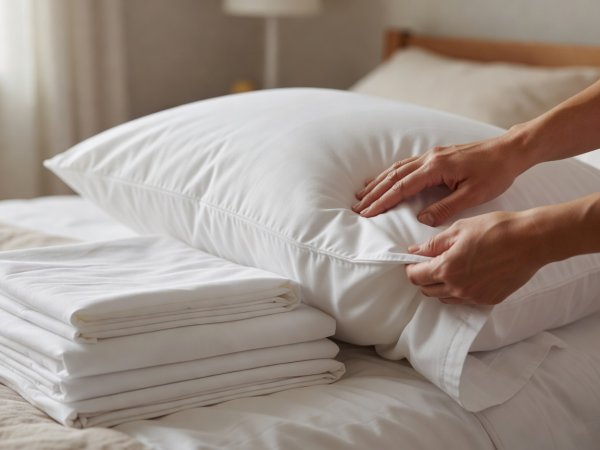
The Pillow Fold Test for Mechanical Failure
Beyond microbiological factors, sleeping pillows function as structural orthotics designed to maintain neutral cervical alignment. Over months of thermal cycling and body weight compression, synthetic microfibers clump into irregular masses, and visco-elastic foam cells break down irreversibly.
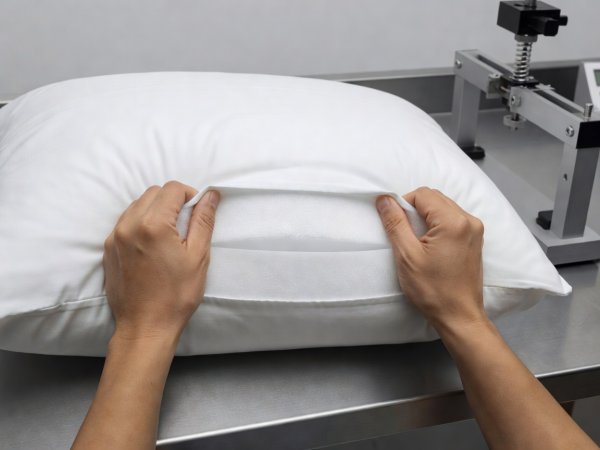
To determine if your pillow requires immediate discarding, perform the basic folding diagnostic: fold a standard pillow in half and compress it firmly with your hands. If the pillow remains folded rather than springing back to a flat contour instantaneously, its cellular integrity has collapsed, placing constant overnight shear stress on your cervical spine.
Mattress Aging: Coils, Foams, and Allergen Vaults
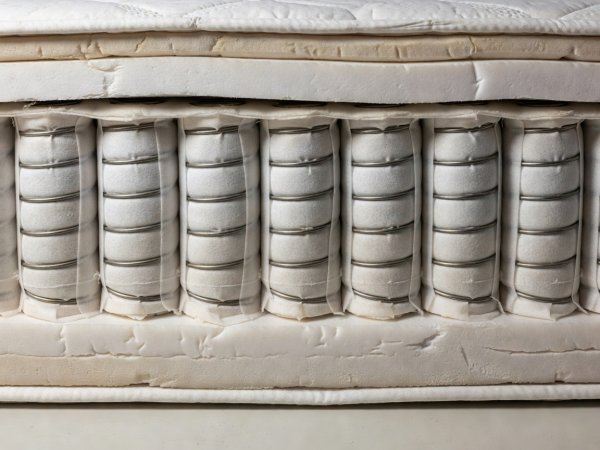
Mattresses exhibit a longer operational window, typically spanning 7 to 9 years. However, several invisible processes compromise sleep hygiene well before visible sagging appears. The polyurethane comfort layer directly under the ticking material suffers progressive compression fatigue, creating a body impression as shallow as 1.5 inches that nonetheless restricts natural nocturnal rotation.
Furthermore, internal pocket springs undergo metallurgical hysteresis after bearing hundreds of thousands of compression cycles. This progressive loss of spring rate forces the lower lumbar spine out of horizontal neutrality. From a sanitation standpoint, high-density encasements reduce perspiration penetration, but mattresses subjected to eight years of continuous occupancy contain tens of millions of microscopic fungal spores, predominantly Aspergillus and Penicillium species.
Recommended Replacement Milestones for Bedding
Synthetic & Down Alternative Pillows
Polyester hollowfiber clumping is inevitable. Micro-fiber strands fuse under body heat and nocturnal humidity, causing irreversible flatten points.
Latex & Memory Foam Pillows
Latex retains resilience longer than fiber, but sebum oxidation and atmospheric ozone exposure embrittle the cell walls, producing crumbling dust.
Innerspring & Hybrid Mattresses
Complete replacement is required when lumbar dip exceeds 2 cm or when waking up with unexplained stiffness occurs three mornings per week.