Kitchen: Sponges & Cutting Boards
Food contact surfaces and wash accessories represent the primary transmission crossroads between raw agricultural proteins and ready-to-eat foodstuffs.
The Kitchen Sponge Paradox
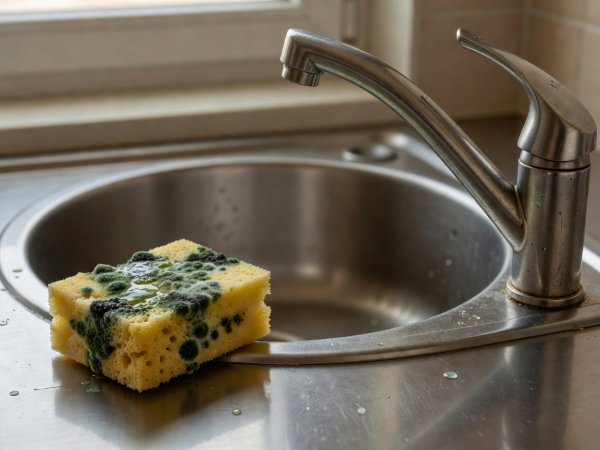
A cellulose or polyurethane sponge possesses an optimal environment for microbial proliferation: continuous hydration, high surface-to-volume ratio via microscopic porosity, and regular infusions of organic food slurry. Within 5 to 7 days of normal domestic dishwashing, the microbial load reaches an equilibrium of approximately 1010 colony-forming units per gram.
Many homeowners attempt to sterilize sponges via microwave heating, boiling, or dishwasher cycles. While thermal exposure drastically reduces total counts momentarily, studies published in Scientific Reports demonstrate that sanitization alters community composition toward stress-tolerant bacterial strains such as Moraxella osloensis. These resistant survivors recolonize the porous sponge interior with heightened virulence within 48 hours. Absolute replacement every 7 to 14 days remains the only sound epidemiological protocol.
Cutting Boards: Wood vs. Plastic Groove Dynamics
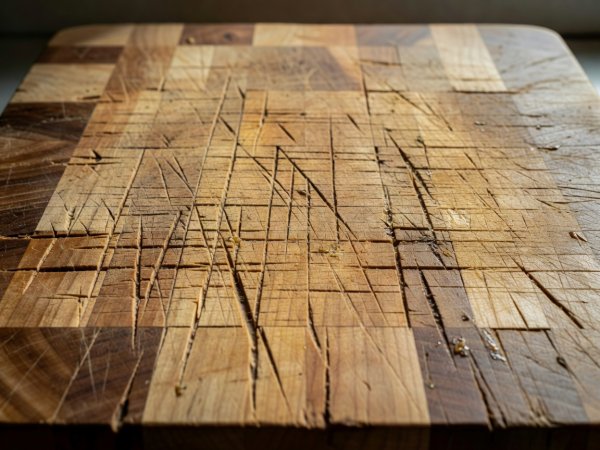
Chef knives leave microscopic incisions on both wooden and plastic prep boards. In plastic boards (typically high-density polyethylene), knife slices produce curling edges that close back over trapped food particulates. Dishwasher detergents often fail to penetrate these micro-caverns, allowing biofilms of Campylobacter jejuni or Salmonella enterica to survive indefinitely.
Hardwood boards (such as end-grain maple) feature natural capillary action and antimicrobial tannins that draw moisture into deeper timber layers, desiccating superficial bacteria. However, once a wooden board warps, splits, or develops deep non-sandable crevices, it can no longer be effectively sterilized and must be retired. Plastic boards should be planed or discarded as soon as dense scoring appears.
Dish Towels and Silicone Utensil Degradation
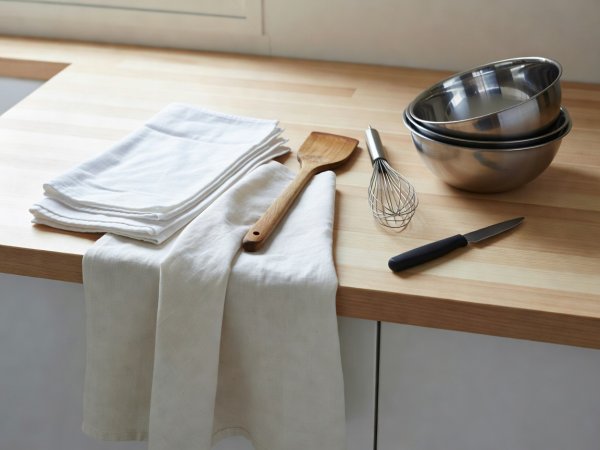
Cotton kitchen towels, frequently used for hand wiping, counter drying, and handling produce, function as rapid cross-contamination bridges. Microbiologists recommend placing kitchen hand towels into a high-temperature 60°C wash cycle every 2 to 3 days to prevent transfer of Escherichia coli to clean dining plates.
Silicone spatulas and cooking scrapers represent another blind spot. Two-piece spatulas with removable silicone heads collect moisture and emulsified cooking fats within the handle socket. If mold colonies develop within this unvented cavity, the utensil must be fully dismantled and sanitized or replaced with an integrated single-piece silicone tool.
Kitchen Replacement Cadence Reference
Polyurethane Dish Sponges
Discard without exception. Do not rely on boiling or microwaving once the initial seven-day usage period has concluded.
Plastic Polyethylene Boards
Replace when knife gouges become deep enough to catch fingernails or when discoloration persists after bleach treatment.
Water Pitcher Carbon Filters
Replace to prevent contaminant breakthrough and microbiological proliferation inside damp carbon granulate cartridges.